Set the Scene with a Hearty Meal
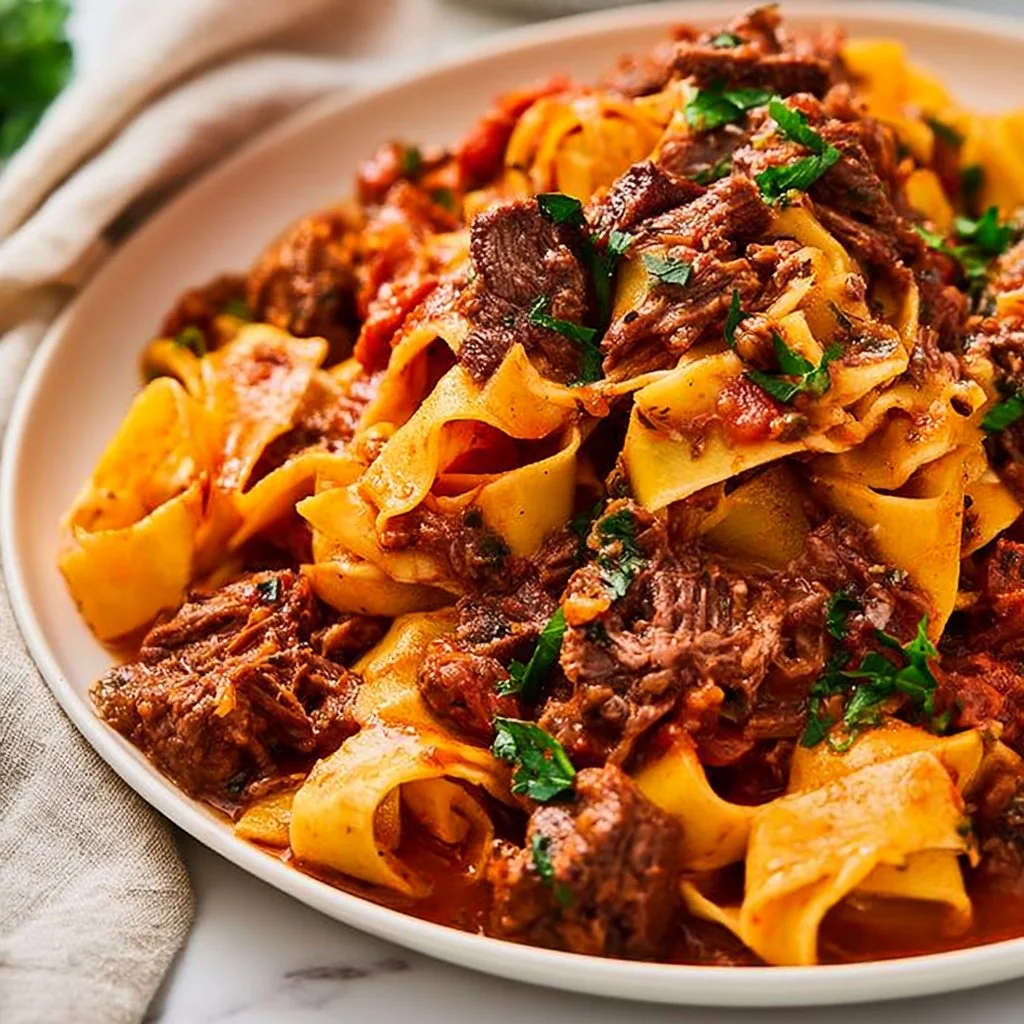
As the brisk air of autumn settles in, there’s nothing quite like the warmth of a delicious home-cooked meal to make your heart sing. Picture this: a rustic kitchen, the faint sound of rain pattering against the windows, and the delightful aroma of slow-braised beef ragù wafting through the air. Serve it over fresh pappardelle, and you have a dish that epitomizes comfort. The rich, hearty sauces meld with tender pasta, creating a symphony of flavors that invite you to savor every single bite.
This recipe is special for more than just its incredible taste. The slow-cooking method allows the beef to become incredibly tender and flavor-packed, fully absorbing the herbs and spices that you add. Each ingredient plays a vital role in creating a unique flavor profile that will have you returning to this dish time and time again. Whether for a family gathering or a quiet dinner, slow-braised beef ragù over fresh pappardelle will warm both your stomach and your soul.
The Story Behind This Recipe
This slow-braised beef ragù recipe has its roots in Italian cuisine, evolving from generations of home cooks sharing their traditions. It brings to mind memories of family get-togethers around a large table, where laughter and love infused the very fabric of the meal. Inspired by an unforgettable trip to a quaint trattoria in Tuscany, the dish emerged as a comforting reminder of warmer days filled with good food and even better company. By bringing this recipe into your home, you’re not just creating a meal; you’re weaving a new culinary tradition for your own family.
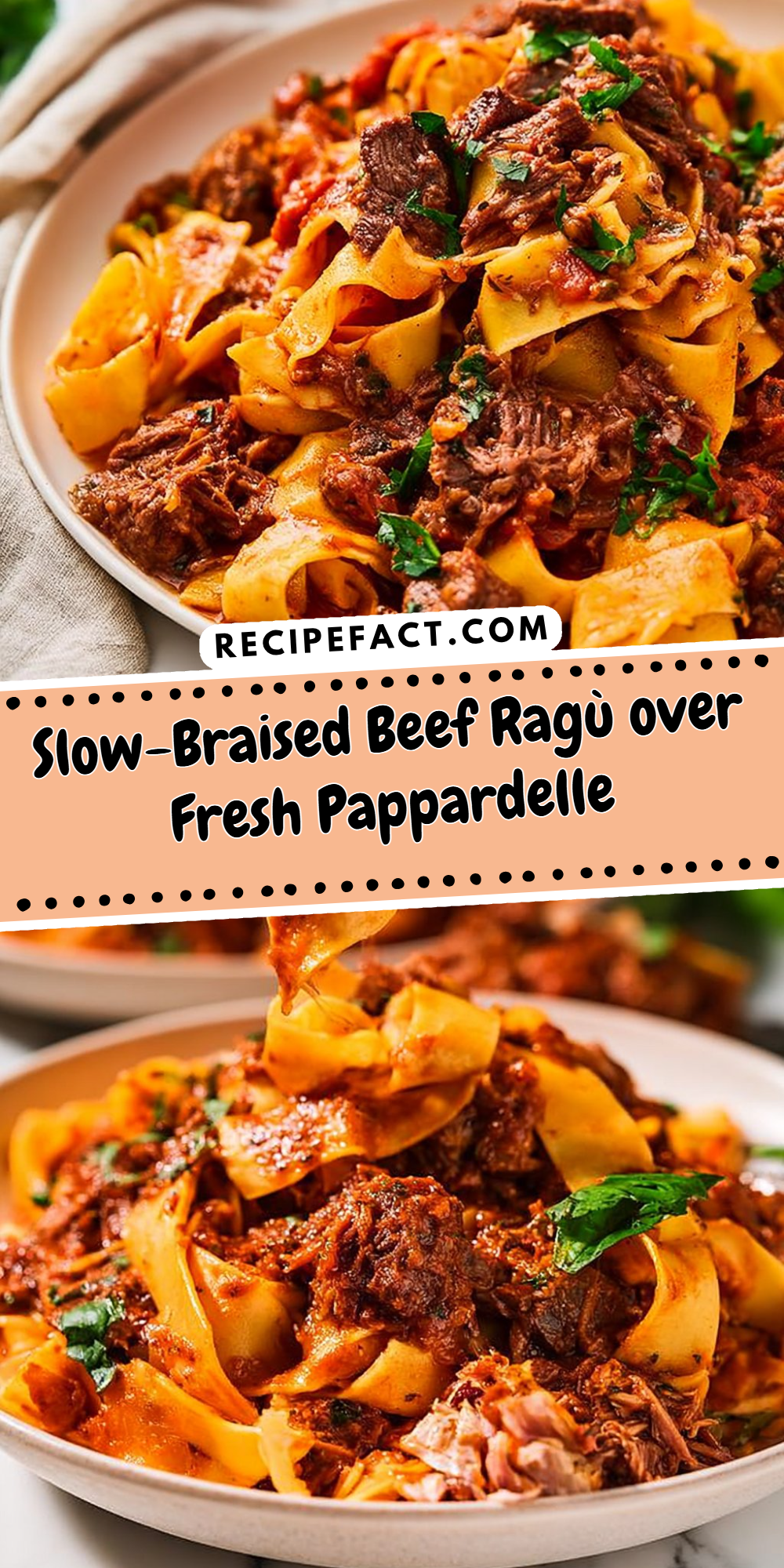
Ingredients: A Delicious Mix of Flavors
Creating the perfect slow-braised beef ragù relies on the harmony of its ingredients that come together to form a complex, layered flavor profile. The combination of the savory ground beef, aromatic vegetables, and fragrant herbs creates a dish that is both rich and satisfying. This ragù isn’t just a sauce; it’s a meticulous blend of tenderness and spice. Each bite contrasts with the silky freshness of homemade pappardelle, enveloping your senses in an unforgettable experience.
The magic happens when you take the time to let each ingredient shine—every onion, carrot, and herb combines to elevate the dish from ordinary to extraordinary. It is literally hands-on cooking that rewards you with the delicious results after a bit of patience.
Main Ingredients
To make this slow-braised beef ragù over fresh pappardelle, you’ll need the following key ingredients that work together to create that iconic flavor:
- Beef: The star of the dish, beef chuck is perfect for braising. It has enough fat content to remain juicy and tender through the long cooking process.
- Onion and Garlic: These aromatic staples lay the foundational flavors, sweetening with slow cooking and infusing the ragù with depth.
- Carrots and Celery: As part of the classic mirepoix, they contribute sweetness and earthiness, enhancing the overall flavor of the sauce.
- Tomato Paste and Canned Tomatoes: They provide rich acidity and umami, balancing all the flavors while creating a luscious texture in the ragù.
- Herbs: Fresh basil and oregano complement the dish, bringing brightness and a touch of earthiness.
- Red Wine: This not only adds depth but also helps to tenderize the meat further during the cooking process.
Optional Additions
For those chefs feeling adventurous, customizing your ragù can transform it dramatically. Consider adding a pinch of crushed red pepper flakes for heat or experimenting with different types of meat like pork or veal. Alternatively, some might enjoy adding mushrooms for an earthy touch or a splash of balsamic vinegar for a sweet, tangy note that can deepen the flavor profile even more.
Special Garnishes
Elevating your dish can be as simple as adding fresh garnishes. A sprinkle of grated Parmigiano-Reggiano not only adds a touch of decadence but also complements the rich flavors of the ragù. A few fresh basil leaves or a drizzle of high-quality olive oil can also enhance both the visual and taste appeal, making the dish restaurant-worthy right in your own kitchen.
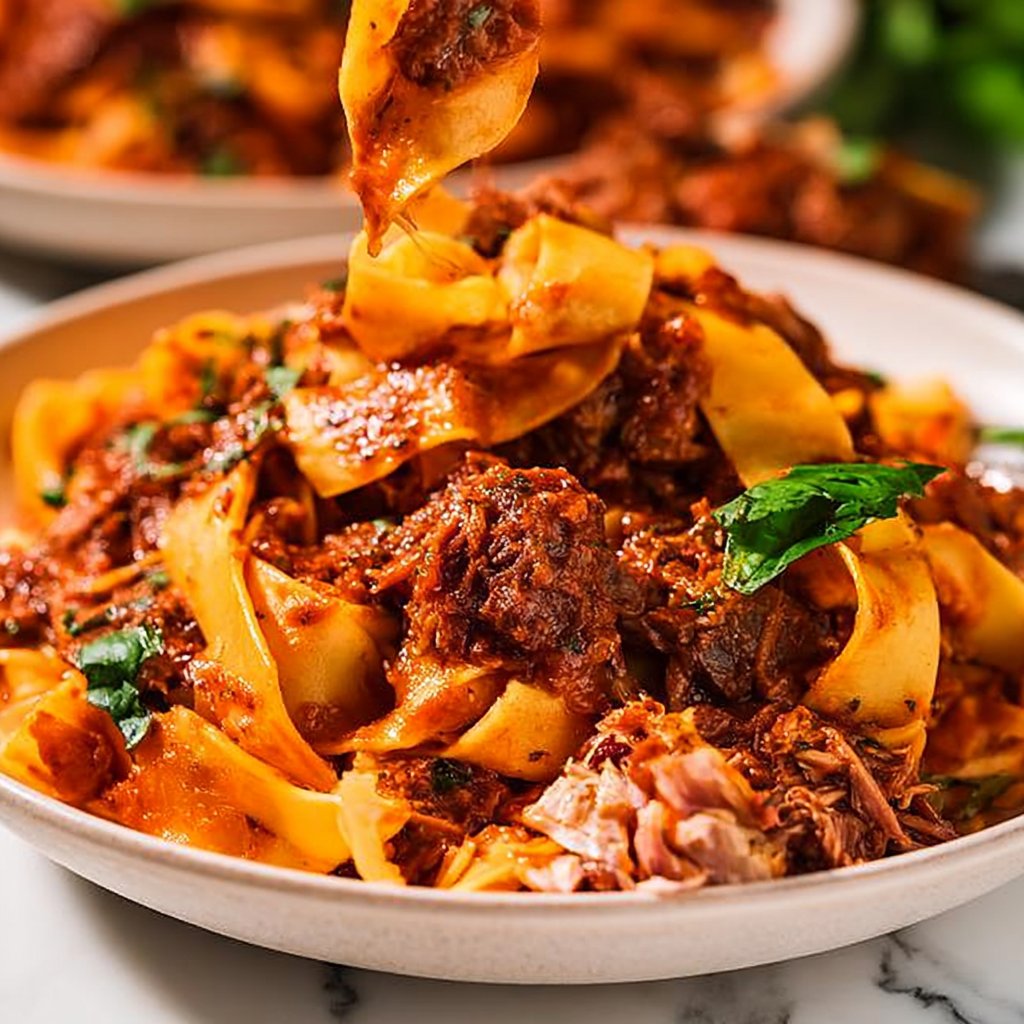
Instructions: How to Prepare Slow-Braised Beef Ragù over Fresh Pappardelle
Now that you have a sense of the flavors at play, let’s explore how to bring this culinary masterpiece to life. The process is relatively simple, yet each step blends science with artistry, ensuring each bite is better than the last. With just a bit of patience, you’ll find that success is right around the corner.
Step 1: Preparation
Begin by prepping your ingredients. Chop the onion, carrot, and celery finely, creating a mirepoix that will serve as the flavor base. Mince the garlic and measure out your herbs and tomato paste. Taking the time for this preparation will streamline your cooking process. A good quality cast-iron Dutch oven or heavy-bottomed pot is recommended, as it evenly distributes heat during the long braise.
Step 2: Mixing and Cooking
In your pot, heat a splash of olive oil over medium heat. Add the mirepoix mix and sauté until they are soft and translucent. Next, increase the heat to medium-high, searing the beef chunks until browned on all sides. This caramelization adds essential flavor. Then, stir in the tomato paste and canned tomatoes, followed by the red wine. Scrape up the browned bits from the bottom of the pot. Now, lower the heat and let it simmer gently for at least 2 to 3 hours, allowing the flavors to meld beautifully.
Step 3: Assembly and Serving
Once the ragù is thickened and the beef is fork-tender, it’s time to combine. Cook your fresh pappardelle in salted boiling water until just al dente; it’ll continue cooking when mixed with the ragù. Drain and combine directly in the pot, allowing the pasta to soak up the flavorful sauce. Serve immediately, garnished with grated cheese and fresh herbs for a breathtaking presentation.
Customizing Your Slow-Braised Beef Ragù
The beauty of this slow-braised beef ragù over fresh pappardelle lies not just in its traditional roots but also in its versatility. Feel free to swap out the beef for chicken or try a vegetarian alternative with lentils or mushrooms. Changing up the pasta may add a personal touch, with options like tagliatelle or rigatoni allowing the sauce to cling deliciously. You can also play around with the herbs, perhaps introducing rosemary or thyme for a different flair.
Dietary Adaptations
For those with dietary restrictions, this recipe can be easily adapted. To make the dish vegetarian or vegan, replace beef with hearty lentils and use vegetable broth instead of chicken or beef stock. Substitute the pappardelle with gluten-free pasta varieties for a gluten-free option while ensuring any dairy garnishes are swapped for vegan alternatives.
Making It a Meal
To complement your slow-braised beef ragù over fresh pappardelle, consider a side salad made with arugula, cherry tomatoes, and a light lemon vinaigrette. A crusty loaf of bread for soaking up every last bit of the sauce is also a must. For dessert, finish the meal with a classic Italian tiramisu or panna cotta, ensuring a balanced and memorable dining experience.
Serving Tips for Social Gatherings
This dish makes for a remarkable centerpiece at family dinners or holiday gatherings. Simply double the recipe to serve more guests, and consider presenting it in a large serving bowl or directly in the pot for a rustic feel. To keep the dish warm throughout the evening, place it in a low-heat oven while your guests arrive. Pairing it with a beautifully set table and adequate seating makes it easy to create a cozy atmosphere.
Presentation Ideas
For a polished look, serve your ragù on a pristine white plate that allows the vibrant colors of the sauce and pasta to shine. Use a large serving platter for family-style dining, garnished with fresh herbs and cheese. Provide small bowls of grated cheese and fresh basil at each place to invite guest engagement.
Thematic Decor
Consider a rustic Italian theme by using wooden boards for serving, adorned with fresh bread, cheese, and olives. To enhance the cozy ambiance, light some candles, and add a few small vases of wildflowers. This simple decor can transport your guests right to Italy’s heart.
Complementary Pairings
When it comes to beverages, a robust Chianti or a full-bodied red wine will perfectly complement the rich flavors of the ragù. If you prefer non-alcoholic options, a refreshing sparkling water with a twist of lemon or a fruity mocktail balances the meal beautifully.
Final Thoughts
This slow-braised beef ragù over fresh pappardelle doesn’t just satiate hunger; it nourishes the soul. With layers of flavor, ease of preparation, and comforting qualities, it truly has the power to become a staple in your home kitchen. It’s more than just a recipe; it’s an experience waiting to unfold. Try it out, and you’ll surely find it making a regular appearance in your weekly meal rotations.
Tips for Making Perfect Slow-Braised Beef Ragù
Achieving perfection with this dish requires attention to detail. Begin with quality ingredients—using fresh, seasonal vegetables and high-quality meat will yield the best results. Allow ample time for braising; rushing this process can hinder the flavors from developing fully. Lastly, consider a taste test at the end; adding a touch of salt, acid (like vinegar or lemon juice), or sweetness (like sugar) can make a world of difference.
Fresh Ingredients
Freshness is key in this recipe. When selecting beef, look for marbling—it means tenderness and flavor. Fresh herbs should be vibrant and fragrant. Choose ripe tomatoes if using fresh, and look for vegetables that are firm and free of blemishes; they will enhance the overall taste of your ragù.
Adjusting Flavor
If your ragù turns out a bit off, adjusting the flavor is essential. If it tastes too acidic, balance it with a sprinkle of sugar or a dash of cream. If it’s too salty, add a bit more liquid—water or stock—and simmer it down. The beauty of cooking is that you can always make it right!
Storage Tips
For any leftovers, store your ragù in airtight containers. It can be kept in the fridge for up to three days or frozen for a month. Reheating can be done on the stove over low heat or in the microwave until warm, ensuring you add a little water or stock to maintain the sauce’s rich consistency.
Make It Ahead
Good news! Most of this recipe can be made in advance. The ragù will taste even better the next day, as the flavors meld beautifully overnight. Simply prepare the pappardelle fresh on the day of serving to elevate your meal to new heights.
Serving Suggestions
For the best enjoyment, serve the dish piping hot, right after mixing the pasta with the ragù. This ensures that every element of the meal contributes to the experience of warmth and comfort about to unfold.
FAQ
1. Can I use a different type of meat for this recipe?
Absolutely! While beef is traditional, feel free to substitute chicken or pork. For a vegetarian option, lentils or mushrooms work well.
2. How do I know if my ragù has cooked long enough?
The ragù is done when the meat is fork-tender and the sauce has thickened to your desired consistency. If it’s still too thin, allow it to simmer uncovered for a while longer.
3. Can I prepare this dish a day ahead?
Yes! In fact, allowing the ragù to rest overnight lets the flavors deepen, making it even more delicious when reheated.
4. What’s the best way to freeze leftovers?
Store the ragù in airtight containers, ensuring it cools to room temperature before sealing. For best results, use it within a month, and reheat it gently on the stovetop.
Conclusion
Slow-braised beef ragù over fresh pappardelle is not just a meal; it’s an expression of culinary love and warmth. With its incredible ease of preparation, robust flavors, and ability to impress any guest, it rightly deserves a spot in your weekly cooking repertoire. So roll up your sleeves, dive into this recipe, and let the rich aromas fill your home. After you’ve tried it, we’d love to hear about your own adaptations or experiences—don’t hesitate to leave a comment!
Print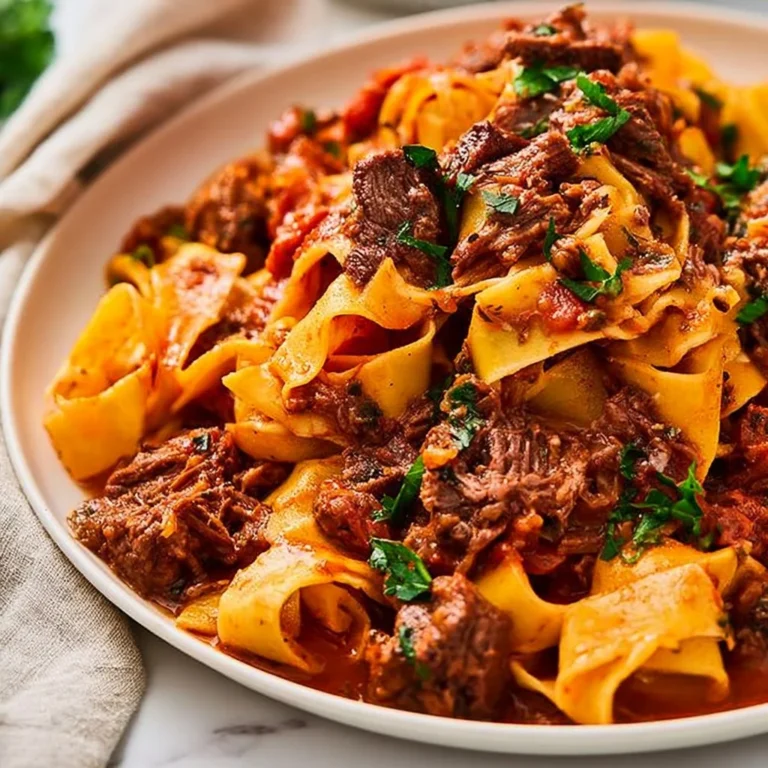
Slow-Braised Beef Ragù over Fresh Pappardelle
A comforting slow-braised beef ragù served over fresh pappardelle, perfect for autumn gatherings.
- Total Time: 210 minutes
- Yield: 6 servings 1x
Ingredients
- 2 pounds beef chuck, cut into chunks
- 1 large onion, finely chopped
- 2 cloves garlic, minced
- 2 carrots, finely chopped
- 2 celery stalks, finely chopped
- 2 tablespoons tomato paste
- 1 can (28 ounces) canned tomatoes
- 1 cup red wine
- Fresh basil and oregano, to taste
- Salt and pepper, to taste
- Olive oil, for cooking
- Fresh pappardelle, for serving
- Grated Parmigiano-Reggiano, for garnish
Instructions
- Prepare the ingredients by chopping the onion, carrot, celery, and mincing the garlic.
- Heat olive oil in a pot over medium heat; add the mirepoix and sauté until soft.
- Sear the beef chunks in the pot until browned on all sides.
- Stir in the tomato paste and canned tomatoes, followed by the red wine.
- Simmer the sauce on low heat for 2-3 hours, until the beef is tender.
- Cook the fresh pappardelle in salted boiling water until al dente.
- Combine the pasta with the ragù and serve immediately, garnished with cheese and herbs.
Notes
This dish tastes even better the next day, so consider making it ahead of time.
- Prep Time: 30 minutes
- Cook Time: 180 minutes
- Category: Main Course
- Method: Braising
- Cuisine: Italian
- Diet: Omnivore
Nutrition
- Serving Size: 1 serving
- Calories: 450
- Sugar: 6g
- Sodium: 600mg
- Fat: 20g
- Saturated Fat: 7g
- Unsaturated Fat: 10g
- Trans Fat: 0g
- Carbohydrates: 40g
- Fiber: 3g
- Protein: 30g
- Cholesterol: 80mg
Keywords: beef ragù, pappardelle, Italian comfort food, slow-cooked beef